Frown lines are small, but their impact on expression can be outsized. The vertical “11s” between the eyebrows often read as stress or irritation even on a calm face. When patients ask about botox for frown lines, they usually want two things at once: to look less stern and to keep their brows moving in a natural way. Doing both requires a thoughtful approach to the glabella, precise dosing, and a plan for maintenance. This guide lays out what matters, from anatomy to aftercare, so you can make a smart decision and avoid the common missteps.

What lives under the 11s
The glabellar complex is a small zone with outsized influence on expression. Three muscles drive those lines: corrugator supercilii pulls the brows inward, procerus pulls the central brow down, and depressor supercilii contributes to the downward tug near the brow head. Over years, dynamic lines etched by repetitive motion become static lines visible at rest. The depth and pattern vary by person. A high-expressive face with thin skin can show etched 11s in the late twenties, while a thicker-skinned forehead in a low-expressor may see only faint lines into the forties.
Botox Cosmetic, and other botulinum toxin type A brands, relax those muscles. The knock-on effect is smoother skin across the glabella and a subtle lift in the inner brow. If the injector understands the interplay of corrugator and frontalis, you get softening without a frozen or heavy look.
Who benefits most from botox for frown lines
If you furrow when concentrating, squint at screens, or carry tension between your brows, you are likely a good candidate. I see two common groups in clinic. First, patients in their late twenties or early thirties who notice faint creases after a long day. They want preventative botox, sometimes called baby botox or micro botox, to keep those lines from setting. Second, patients in their late thirties through fifties with clear static 11s that persist even when they relax. For them, regular botox treatments can soften the etched lines, though deeply engraved creases may also need microneedling, laser, or a tiny amount of hyaluronic acid filler to fully lift the skin once the muscle is relaxed.
There are reasons to wait or avoid. If you are pregnant or breastfeeding, hold off. If you have a neuromuscular disorder, discuss risks with your physician. If your brows sit low at baseline, aggressive dosing can flatten expression and worsen heaviness. A skilled injector can adjust placement and units to preserve brow position.
A quick look at the botox procedure
A well-planned botox appointment for the glabella is usually 15 to 25 minutes. The consultation matters as much as the injection. I watch the face at rest, then ask the patient to frown, squint, raise the brows, and smile. The aim is to see where the corrugators insert, how strong they are, and whether the frontalis is compensating for any heaviness. Marking five standard points is common, but I prefer to customize placements by palpating for the muscle belly and tracking the arc of movement. Less is often more along the brow line if a patient is prone to heaviness or is new to botox.
The injection sensation is quick and tolerable. Most patients describe it as a brief sting. I use a fine insulin syringe or 32 to 33 gauge needle, small aliquots per point, and a steady hand. Bleeding is minimal. You can expect a few pinpoint bumps that flatten within 10 to 20 minutes as the saline carrier disperses.
How many units is typical
For the glabella, common total dosing ranges from 10 to 25 units of on-label botulinum toxin type A, depending on the brand and the patient’s muscle strength. Men, or anyone with stronger corrugators, often land toward the higher end. Ultra-conservative baby botox in this area might start at 8 to 12 units. Many first-time patients do well with a moderate approach and a follow-up touch up at two weeks. That way we avoid overshooting and learn how their face responds.
A quick note on brands. While “Botox” has become shorthand, similar products include Dysport, Xeomin, Jeuveau, and Daxxify. Each has slightly different diffusion characteristics and unit equivalencies. For the patient, the practical differences are usually subtle when the injector is experienced. Choosing a brand often comes down to availability, price, and how your face has responded in the past.
What results to expect, and when
Botox results unfold in stages. You may feel a gentle “lightness” within 48 hours. Visible softening typically appears by day 4 to 5, reaching full effect at around day 10 to 14. The lines look less etched, your resting expression seems calmer, and your makeup sits more smoothly. You should still be able to make expression, just with less intensity. If you like hyper-expressive brows for acting or public speaking, ask your injector to spare more of the medial frontalis so your range remains intact.
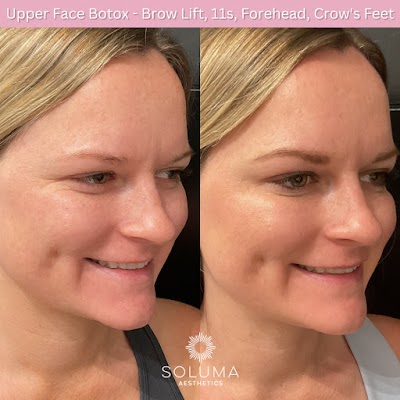
Patients often bring botox before and after photos to track subtle changes. The best comparisons use the same lighting, angle, and expression, one set at rest and one with a deliberate frown. In etched lines, I show patients how the skin texture evolves session by session, not just at peak effect. The goal is cumulative smoothing over months as the skin gets a break from constant folding.
How long botox lasts in the glabella
In the glabella, botox duration usually runs 3 to 4 months. Some enjoy 4 to 5 months, especially after a year of consistent treatments. Lighter dosing wanes faster. More active patients, especially those who frown or squint often, may sit closer to 10 to 12 weeks. I counsel a maintenance window rather than a fixed date. Book your botox appointment when movement returns to about 50 percent, not when everything has fully worn off. That rhythm reduces the tug-of-war on the skin and can extend botox longevity over time.
Natural look versus frozen forehead
The “frozen” look comes from over-relaxing multiple upper face zones at once, especially if the frontalis is treated aggressively in someone with low-set brows. The glabella is more forgiving on its own. If you treat only the 11s, you often keep good eyebrow mobility. That said, a small amount of botox in the tail of the corrugator can cascade into the inner brow. Precise depth and a conservative medial frontalis plan are the guardrails. I tell patients who fear looking done to start with the glabella alone, then assess at two weeks before adding the forehead or crow’s feet.
For those chasing a subtle lift, a carefully placed botox eyebrow lift uses balancing doses in the lateral frontalis and tail of the orbicularis oculi to give the outer brow a mild rise. This works best on a forehead with adequate height and good skin elasticity. It is not a substitute for a surgical brow lift, but when done well, it refreshes the eyes without shouting.
Cost, value, and smart budgeting
Botox costs vary by region and clinic. Two pricing models are common: per unit and per area. Per unit pricing in many US markets ranges roughly from 10 to 20 dollars per unit, with premium practices sometimes higher. A typical glabella treatment might require 10 to 25 units, so the botox price for this area alone could run from about 150 to 500 dollars, sometimes more in major cities or with senior injectors. Area pricing may bundle the glabella for a flat fee regardless of units. If you have strong muscles and need higher dosing, per area pricing can be favorable. If you prefer baby botox, per unit pricing often makes more sense.
Value is not only about the invoice. Consider injector experience, safety protocols, brand authenticity, and follow-up support. I encourage first-timers to ask whether the clinic schedules a complimentary two-week review to assess results and offer a touch up if needed. That aftercare is worth paying for.

Safety, side effects, and how to avoid pitfalls
Botox is well studied with an excellent safety record when administered by trained professionals. The most common side effects are mild: brief redness, small bruises at injection sites, and a transient headache or tight sensation that settles in a day or two. Rare but possible side effects include eyelid ptosis and asymmetry. In the glabella, ptosis often results from too low or too medial placement that allows diffusion near the levator palpebrae. It usually improves as the botox effect eases, but prevention is better than any fix.
Those with heavy upper lids, thin skin, or a habit of chronically lifting their brows to “open” the eyes are more sensitive to dosing changes. I reduce units along the inferior corrugator and avoid deep medial frontalis hits in these patients. Hydration, light pressure on injection points for a few seconds, and thoughtful needle angle reduce bruising. I advise patients to skip blood-thinning supplements like fish oil, ginkgo, and high-dose vitamin E for a few days before treatment if medically appropriate.
What to do after your appointment
Aftercare is simple but important. Keep your head upright for four hours, avoid pressing or massaging the area, and skip strenuous exercise until the next day. Face washing is fine with gentle strokes. No steam rooms or hot yoga that day. Makeup can go on after a few hours if the skin is calm. These small steps limit unwanted diffusion and minimize swelling.
How botox fits with the rest of the face
Treating the glabella alone can transform the overall expression, but harmony matters. If you soften the 11s, you may notice new attention on forehead lines, crow’s feet, or bunny lines along the nose when you smile. That is not a complication, just contrast. Some patients choose to add a few units around the eyes for balance. Others prefer to keep movement elsewhere. There Orlando botox is no rule that you must build a full upper face plan. The best sequence is the one that fits your goals, budget, and comfort level.
For lower face concerns, botox has roles that are quite different from glabella work. Masseter reduction for jawline slimming helps with clenching and facial contouring. A small dose for a gummy smile can refine tooth show. Chin dimpling, neck bands, and a subtle smile lift are all possible but require a measured hand and a clear discussion of trade-offs. These do not have to be done together, and they should never distract from the core aim if the 11s are your primary concern.
Preventative botox and first-time nerves
Preventative botox has a place for those whose expressions fold the same crease dozens of times a day. The point is not to freeze movement, but to reduce the peak force that etches the skin. In younger patients, 6 to 12 units in the glabella two or three times per year can limit the formation of etched lines without obvious change in facial language. Some call this mini botox or micro botox. The principle is the same: right dose, right depth, right points.
First-time patients often worry they will “look different.” I tell them that friends tend to notice they look rested, not altered. If you are anxious, start on the lighter side. You can always add a little at day 14. Control, in aesthetics, comes from restraint and iteration.
When botox is not enough for deep 11s
Years of intense frowning can leave a groove in the dermis that botox cannot erase on its own. Here I combine therapies. Botox stops the muscle from re-folding the skin. Then we consider resurfacing to smooth the texture and a microdroplet of hyaluronic acid filler placed deeply to lift the trench if needed. The order matters: treat the muscle first, reassess at two weeks, then add filler if the line remains visible at rest. Doing filler before relaxing the muscle invites a short-lived result because repetitive motion compacts the product and re-etches the crease.
A realistic timeline and maintenance plan
Think in three-month arcs rather than single events. Month 0, you get your botox injections. Days 4 to 14, the effect ramps up. Weeks 8 to 12, the movement slowly returns. Somewhere around month 3 to 4, you plan your next session. After a few cycles, many patients find the etched line softens even at baseline. Skin quality improves when it is not creased dozens of times a day. That is the quiet benefit of botox anti aging in dynamic areas.
If your schedule is packed, align treatments with natural checkpoints: after a big project, before travel, or in calm seasons when you can come back for a day-14 review. Keep a simple note on your phone with dates, doses, and impressions. At your next botox consultation, that record helps your injector fine tune the plan.
Frequently asked, answered with context
Do botox results look natural? Yes, when dosing matches your muscle strength and the injector respects brow dynamics. If you do not want to treat the forehead, make that clear. Want a tiny lift? Say so. Natural is a goal you can define together.
How fast does it work? You will feel a shift by day two or three, see visible smoothing by day five, and hit the peak by the end of week two. If something seems off at day four, let it settle. The two-week mark is the true checkpoint.
What about botox side effects and risks? Expect mild redness, possible small bruises, maybe a transient headache. Uncommon side effects include eyelid droop and asymmetry. They are usually self-limited. Choose a qualified injector, follow aftercare, and report anything unusual.
Is botox safe long term? Decades of data support its safety with appropriate dosing intervals. Muscles do not “stop working.” At most, you will find that the habit of over-frowning fades, which is part of the benefit.
How does botox compare to fillers for the 11s? Botox treats the cause, which is muscle overactivity. Filler treats the consequence, which is a crease in the skin. For mild to moderate lines, botox alone does the job. For deep, static grooves, a touch of filler after botox has settled can complete the result.
When medical uses cross over
A number of patients find botox for migraine treatment and jaw clenching adds aesthetic benefits. Masseter injections for bruxism can slim a square jaw, and procerus injections for migraines can soften central brow tension. The dosing and mapping for medical indications often differ from cosmetic plans, so coordination with your treating physician matters. If you are coming in for botox for hyperhidrosis, keep the glabella discussion separate. The techniques are unrelated, but timing can be coordinated so you have one recovery window.
What a good consultation sounds like
A strong consult is conversational but specific. Your provider should ask what bothers you, what you liked or disliked in past treatments, and what you want to keep. You should hear a plan that references your facial anatomy, not a one-size-fits-all script. Phrases I like to hear from colleagues: “Your corrugators are active but your frontalis is compensating. We will spare the medial frontalis to protect your brow height.” Or, “You have etched static lines. We can start with botox and reassess for a microdrop of filler next visit if the groove remains.” When a provider explains the why behind each point, you know you are in collaborative hands.
The quiet art of dosing
The difference between a pleasant softening and a heavy look is often a few units and two or three millimeters of placement. If a patient reports past brow heaviness, I raise the injection points slightly and lighten the medial dose. If the inner brows aim downward sharply during a frown, I treat the procerus more precisely and avoid spreading product laterally. For athletes or frequent hot-yoga enthusiasts, I counsel that metabolism and heat may trim the duration by a couple of weeks. Then we tailor maintenance to fit reality.
Touch ups, corrections, and timing
Two-week assessments are where finesse lives. If a vertical line remains more prominent on one side, I often add a small unit to the stronger corrugator. If the brow feels heavy, I do not add more glabellar botox; I consider a light lift in the lateral frontalis if appropriate. Over-correction is rare in this area, but if it occurs, you wait and let movement return naturally. Enzyme reversal is not an option for botulinum toxin the way it is for hyaluronic acid fillers. That is another reason to respect conservative starts.
The role of skincare and habits
Botox smooths movement but does not replace skincare. Sunscreen slows collagen breakdown that deepens lines. A gentle retinoid or retinaldehyde supports dermal remodeling. If you work under harsh lighting or glare, tweak your environment. Many patients frown less at work after reducing screen brightness, lifting monitors to eye level, and enlarging font size. Small tweaks are not glamorous, but they keep the 11s from training back to form.
When to consider alternatives
Some patients want to avoid injectables. Alternatives exist, though none match botox for dynamic line control in the glabella. Radiofrequency microneedling, fractional lasers, and topical peptides can improve skin texture and elasticity, which helps etched lines look better at rest. They do not stop the muscle from folding the skin. If you prefer a non-injectable path, be realistic about outcomes. It is reasonable to try a laser series first and revisit botox later if needed.
A practical way to start
- Book a consultation with a provider who performs these injections daily and welcomes questions. Bring clear photos of your face at rest and when frowning, taken in natural light. Ask for a conservative plan with a scheduled two-week follow-up for potential touch up. Pause blood-thinning supplements if appropriate, and plan light activity for the rest of treatment day. Track your personal botox results and duration to fine tune future sessions.
Setting expectations you will feel good about
The best botox for frown lines makes your face read the way you feel. Less stern, more open, still you. Expect a quick treatment, a gentle ramp-up of effects over two weeks, and maintenance every few months. Expect to tweak doses as you and your injector learn your patterns. Expect trade-offs. Maximum smoothness means less movement, while maximum movement leaves a trace of lines. Most patients pick a middle path, and that middle is where natural, confident results live.
When you treat the glabella with care, you get more than a smoother brow. You ease the weight of a habitual frown, you stop rehearsing stress into your skin, and you reclaim a little calm every time you catch your reflection. That is the quiet promise of smart, well-executed botox.